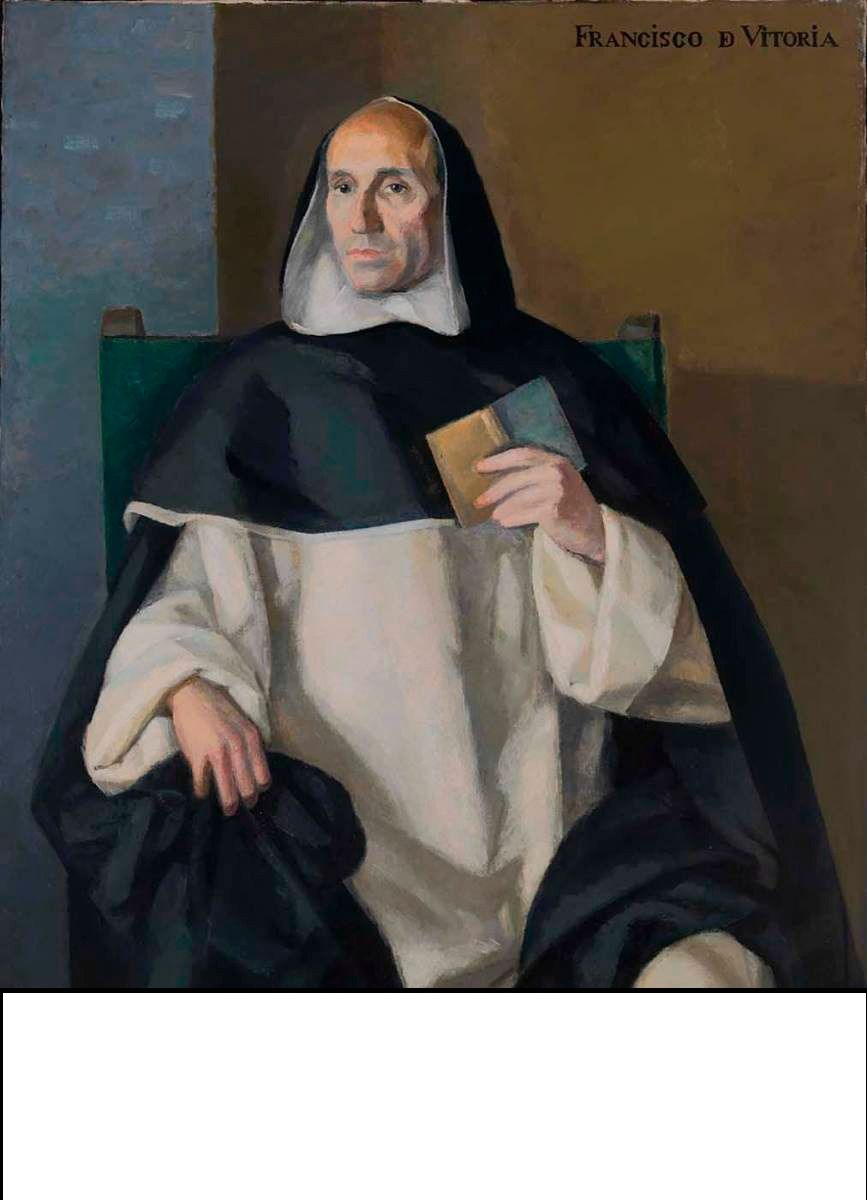
The Spanish Dominican Franciscus de Vitoria joined the Order of Preachers in 1504. in. He studied at the Abbey of Saint-Jacques in Paris, where he met Erasmus and other Renaissance humanists.
In 1522, he returned to Spain to teach friars who were being prepared to become missionaries in Latin America. Two years later, Francisco de Vitoria was elected professor of theology at the University of Salamanca, where he became one of the most influential thinkers of his time. Emperor Charles V often consulted him on colonial policy and the rights of the indigenous peoples of the Americas. Vitoria asserted that indigenous peoples were rational and members of organized societies and therefore possessed natural rights that could not be taken away from them. His work laid the foundation for the development of international law and profoundly influenced Bartolomé de las Casas' work in defense of the Native Americans.
Today, the main hall of the UN Human Rights Council in Geneva bears his name, as a tribute to his intellectual legacy, which served the dignity and worth of the human person.